A place, not a program

The Bloom Room

A room where you can make anything, and nobody is in charge of what you make.

Life is Art. Bloom Boldly.

Why

Four facts, not a feeling

Art is S.M.A.R.T. has always been a claim about science. Here is the part of that science this room is built on.

75%

Stress hormones dropped after 45 minutes of making art

Drexel measured cortisol in saliva before and after. Markers, clay, collage. Three quarters of people dropped, and there was zero correlation with how good they were at art.

So nobody in the room has to be talented. That is the whole permission slip.

Read the study

Offline

The brain's language center shuts down during trauma

Brain scans of trauma survivors showed Broca's area, the region that turns experience into words, measurably shutting down. Researchers call it speechless terror, and they mean it literally.

You cannot talk your way out of something stored where words do not reach. Art is not the softer option. Sometimes it is the only one open.

Read the study

Loosest

The task with the least structure lit up the brain the most

Twenty six people wore brain sensors while coloring inside a pattern, doodling, and drawing whatever they wanted. All three lit the reward pathway. Doodling, the freest task, lit it most.

The open room is not the lazy version of an art class. The freedom is the active ingredient.

Read the study

Drums

Music does the same work as paint, for different people

Group drumming with people carrying post-traumatic stress reduced isolation, reduced rage, and gave a non-threatening way back into hard memories while keeping a sense of control.

That is why there are instruments in the room and not only brushes. Some people's channel is not visual.

Read the review

The one rule

  • No assignments.
  • No critique.
  • No sharing required.
  • No finished product expected.
  • You can come in and make nothing.

It has to be said out loud, more than once, because everyone who walks in assumes there is a right way to do it.

What is in it

Four ways out

Make

Paint, watercolor, pencils, charcoal, pastels, clay, canvas, collage, paper in real sizes. Cheap and plentiful beats nice and rationed. Nobody experiments on the good paper.

Play

Keyboard, guitar, ukulele, banjo, hand drums, shakers. Instruments that make a sound on the first try and do not need a lesson.

Write

Notebooks, loose paper, pens. Some people write instead of draw. Nothing written here gets read. If you want someone to read it, that is yours to offer.

Keep or bin it

A wall for work people want seen, and a bin for work they do not. Both matter exactly the same amount.

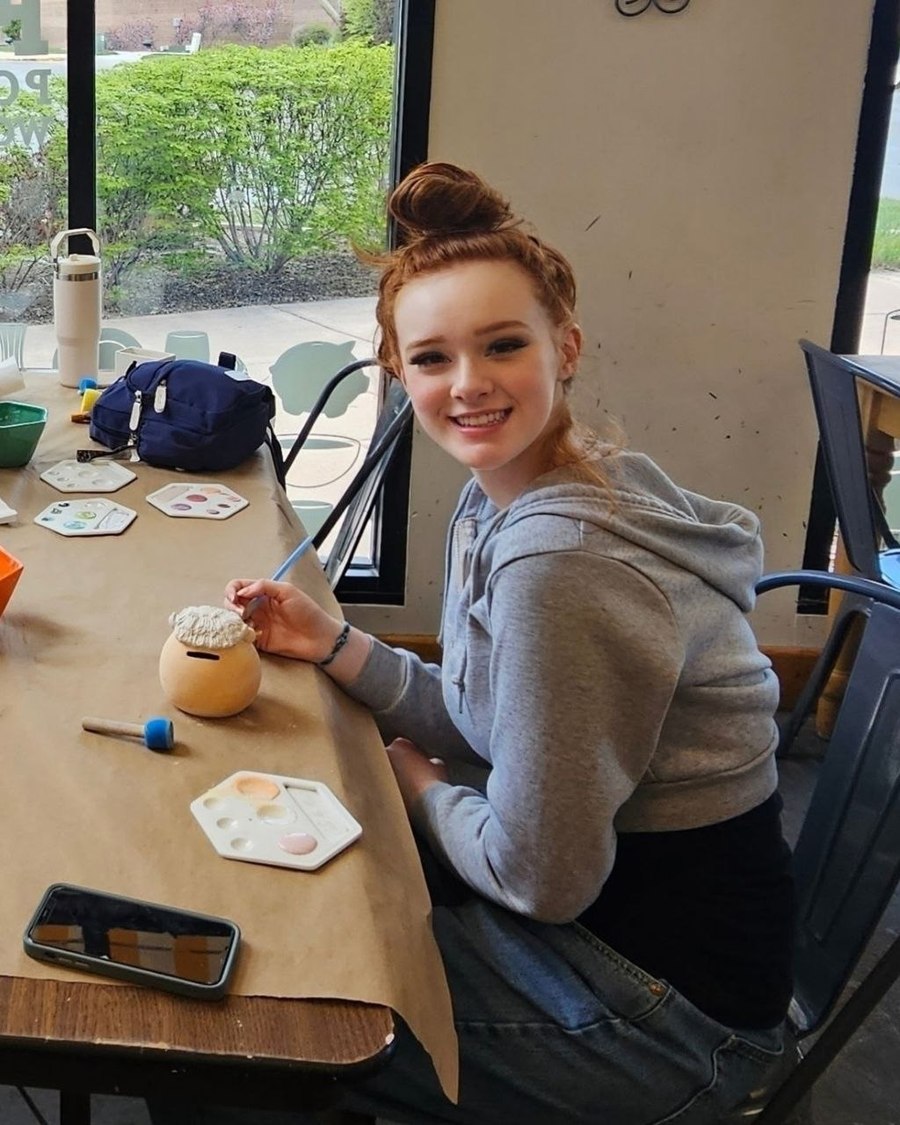
Kamryn Fenn painting a ceramic piece at a paper-covered table with palettes and glaze bowls
Make. Hands busy, table covered, nothing on it too precious to ruin.
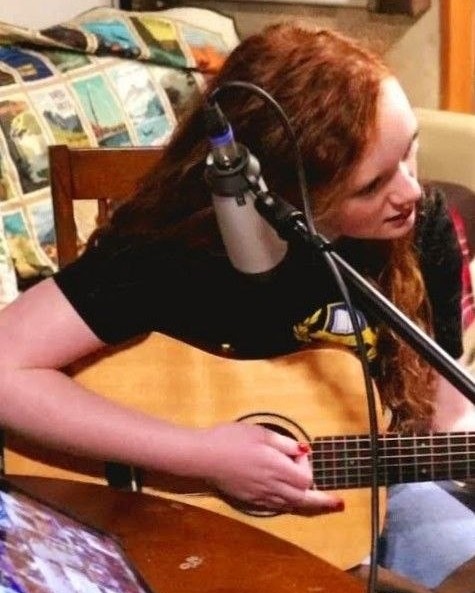
Kamryn Fenn playing acoustic guitar into a microphone at home
Play. The instruments are there for the same reason the paint is.

The room

Privacy without being alone

Nobody makes anything honest if they think someone is reading over their shoulder. But a room for teens cannot have hidden corners either. So the walls do the work: staff can always see that a person is fine, and nobody can see what is on their paper.

supply wall instruments rug, low light open tables sit together angled nooks backs to the wall the wall the bin the door, always in view

Easels angle away from each other. Every seat has a wall behind it and a clear line to the door. Two things teens and trauma both care about: nobody behind you, and you can leave.

How it grows

Kit, room, trailer

Never build the container before you know the contents. Each stage pays for the next one and proves it is worth building.

  1. 01

    The kit

    Rolling cases. Any room, this month.

  2. 02

    The room

    A host gives the space and staffs it. The first real pilot.

  3. 03

    The trailer

    Schools, festivals, youth nights, once a sponsor has seen it work.

    Life is Art. Bloom Boldly.

Where it goes

Built for teens first

Art is S.M.A.R.T. started with students who are struggling, and that is who a Bloom Room is for: schools, youth groups, alternative programs, festivals, church youth nights. Anywhere teens already are.

The open version

A table, the supplies, and an open door. Nobody signs up and nobody gets called on. You sit down, you make something, you leave with it.

This is the version that fits a school, a youth night, or a festival booth.

The careful version

Some rooms need more than an open door. Where a group is already in a clinical or recovery program, a Bloom Room runs beside that program and never instead of it.

That means the adults staffing it carry background checks, boundaries training, and clear direction on what to do if someone says something serious. Same room. Different rules, on purpose.

This is a peer space. Not therapy, not a class, not a lesson. A room where making things is the only thing happening, run by the people who are already there, with the door open.

Kamryn designed the room and hands it over. It is staffed the way a public library is staffed, by the school, the youth group or the host. She helps get a room open and comes back when it is useful, but the room does not wait on her.

Start a Bloom Room at your school